✨ Bindu – India-Bhutan Border Village with Rivers and Suspension Bridge ✨
🌿 Where Two Countries Whisper Across a River
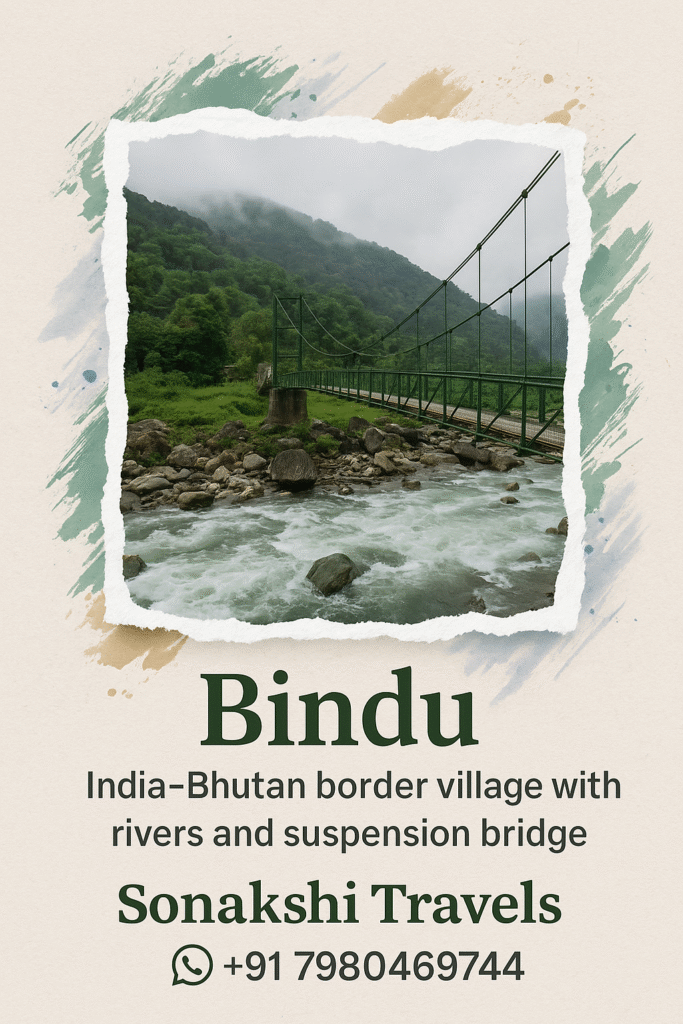
I remember the first time I stood on the old suspension bridge at Bindu, the gentle roar of the Jaldhaka River beneath my feet and the mist rising from the surrounding hills. On one side lay India, and just across the riverbank, Bhutan waved quietly through the trees. There were no border fences here, only rivers, forests, and a silence so profound it felt sacred.
Bindu, a remote village located in the Kalimpong district of West Bengal, sits right on the edge of the Indo-Bhutan border. It is where the Jaldhaka River, flowing from the hills of Bhutan, becomes both a boundary and a bond. With suspension bridges, lush cardamom plantations, a hydroelectric dam, and smiling locals, this village feels like it exists in a forgotten chapter of a traveler’s diary.
This is not a place you just visit. This is a place you feel.
🚐 Getting There: Through Forests, Tea Gardens, and Misty Turns
☞ How to Reach Bindu
- From Siliguri/NJP: Approx. 110 km (4.5 to 5 hours)
- From Malbazar: 90 km (3 hours)
- From Jhalong: 15 km (30 minutes)
- From Samsing: 30 km (1.5 hours)
🚜 Travel Options
- Best accessed by private vehicle or taxi from New Mal Junction
- Shared jeeps are rare, though available from Gairibas or Jhalong
Pro Tip: The final stretch from Jhalong to Bindu is incredibly scenic — rolling hills, pine forests, and glimpses of river rapids.
🌟 Attractions and Experiences in Bindu
🛏️ The Iconic Bindu Suspension Bridge
The heart of the village is the historic iron suspension bridge that connects India and Bhutan.
- Built over the Jaldhaka River
- Only pedestrians allowed
- Photo-perfect with colorful prayer flags fluttering against emerald hills
Stand in the middle and let the breeze remind you how simple peace can be.
🚧 Bindu Dam & Hydroelectric Project
The first dam built jointly by India and Bhutan.
- Not open for public entry but can be viewed from nearby
- Spot local fishermen trying their luck in the calm waters
🌿 Cardamom and Orange Orchards
Bindu is famous for its cardamom plantations and seasonal oranges.
- Join a local farmer for a walk through spice-scented terraces
- November to February is the best season for citrus harvest
🌱 Forest Trails and Border Walks
🚶 Short Hikes and Village Walks
Explore nearby settlements like:
- Godak: 6 km forest trail
- Todey Tangta: Further uphill with Bhutanese culture
- Gairibas viewpoint: Stunning sunrise spots over cloud valleys
Bring a walking stick and a good pair of shoes — the terrain is gentle but rugged.
🦜 Birdwatching Paradise
The riverine and forest ecosystem around Bindu is home to:
- Red-vented bulbuls, great barbets, plumbeous water redstarts, and more
- Best times: Dawn and dusk near the riverbanks
🍲 Local Cuisine and Village Hospitality
🍽️ What to Eat
- Churpi soup with steamed rice
- Buckwheat roti with cardamom chutney
- Freshwater fish curry (if you’re lucky)
- Orange pickle and ginger tea
Meals are always freshly prepared, often enjoyed sitting cross-legged on floor mats with the family.
🏡 Homestay Warmth
- Every house feels like home
- Rooms are simple: wooden walls, hand-woven quilts, solar lights
- Expect stories, smiles, and occasional home-brewed millet beer
🌞 People and Culture
The residents are a blend of Nepali, Lepcha, and Bhutanese-origin families.
🎟️ Local Highlights:
- Traditional farming using terrace methods
- Handmade bamboo crafts
- Folk music played on madal and flute during local festivals
Festivals to Witness:
- Losar (Tibetan New Year)
- Tihar and Dasain (celebrated in October-November)
🌆 Nearby Places Worth Visiting
- Jhalong (15 km): Riverside village with hydroelectric site
- Paren (20 km): Forest stays and wildlife
- Samsing (30 km): Tea gardens and birdwatching treks
- Neora Valley National Park (35 km): Biodiversity hotspot
You can easily do a 4N/5D border-to-forest trail circuit starting or ending at Bindu.
🌟 Best Time to Visit Bindu
- October to March: Clear skies, orange harvest, cardamom scent in the air
- April to June: Ideal for river picnics and mild temperatures
Avoid monsoon (July to early September): Roads become tricky and foggy.
🏨 Where to Stay in Bindu
🏡 Recommended Accommodations
- Bindu River Retreat: Rooms with balcony views
- Kanchen Eco Homestay: Solar-powered and organic
- Damview Homestay: Short walk from the bridge
Most stays include meals, hot water, and all the quiet you can ask for.
⛵ Travel Tips for Bindu Explorers
📍 Essentials to Pack
- Warm clothes (nights are cool year-round)
- Power bank, torchlight
- Reusable water bottle
- Basic medicines and first aid
- Binoculars for birding
⚠ Safety and Etiquette
- Ask before photographing locals or houses
- Don’t litter near the river or bridge
- No alcohol near religious spots
- Respect silence in forest and riverside areas
🌺 My Emotional Takeaway: When Borders Disappear
Standing on that old bridge, I watched the sun melt behind the hills of Bhutan while India cradled me gently. There was no loud music, no tourist chatter. Just water, wind, and welcome.
Bindu taught me something simple: some borders are meant to be felt, not crossed.
In a world so loud, here was a village that listened. A place that healed. A journey that mattered.
🚊 Book Your Border Escape with Sonakshi Travels
Ready to breathe where two nations meet?
🌟 🛕 From Kolkata to the Creeks — Your Gateway is a Sundarban Tour Package!
Start your adventure from the city, and end in a sanctuary of silence and sights.
Start your adventure from the city, and end in a sanctuary of silence and sights.
Includes transport from Malbazar, stay in Bindu, bridge and river tour, and orchard visit
🕊️ 🌠 Stargazing from a boat during your Sundarban Tour makes even the galaxies feel close to Earth
5D/4N trail from Samsing, Jhalong, Paren to Bindu with meals, homestays, and guided walks
Let the river draw your map. And let your soul follow.
📱 Contact Sonakshi Travels
Whatsapp: +91 7980469744
Because sometimes, the best journeys happen at the edge of maps.